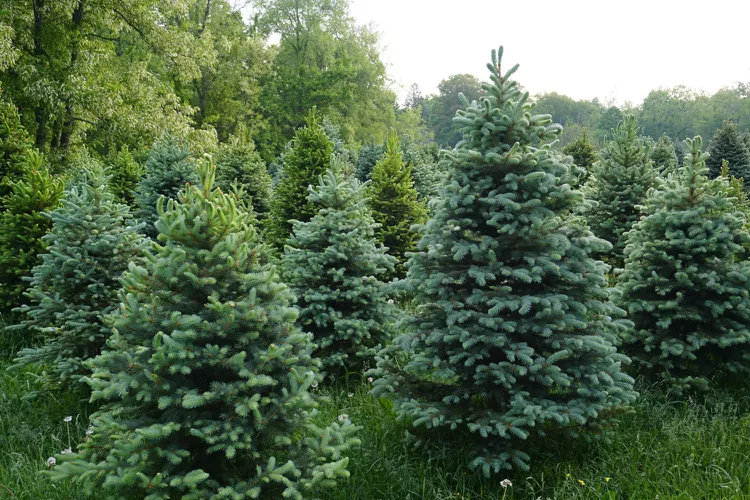
Christmas is just a week away and the leaves have turned golden, fallen, and left the trees bare. If you’re lucky enough to have a real Christmas tree, you might be wondering how it has stayed so green and full of needles while other trees have lost their leaves.
Why are leaves green?
Plants, along with some algae and bacteria, capture sunlight to make sugar in a process called photosynthesis. This sugar provides the plant with energy and is used to make essential building blocks needed for growth.
Leaves are the main sites for this energy production because they contain a green pigment called chlorophyll. It is this chlorophyll that captures energy from sunlight.
Every colour we see, like those in a rainbow, is part of the visible light spectrum. Objects appear coloured because they reflect some wavelengths of visible light while absorbing others. Chlorophyll absorbs mostly red light and some blue light while reflecting green light. So, leaves look green because the chlorophyll within them reflects green light.
Why do leaves turn yellow?
As days grow shorter, trees and plants receive less sunlight and photosynthesis slows. To prepare for winter, trees begin to break down chlorophyll and reabsorb valuable nutrients and sugars contained within, storing them in their roots. When chlorophyll breaks down, the green pigment disappears, revealing the yellow sand oranges of other pigments that were previously hidden. Eventually, these leaves die and fall off, leaving branches bare.
This process is called abscission, and is a natural hormone-driven change triggered by the shorter days and cooler temperatures. Abscission conserves water and reduces energy needs, allowing plants to enter dormancy during winter.
How do evergreens stay green?
Evergreens, such as Christmas trees, are unique because they keep their foliage year-round. Most popular Christmas tree species—fir, spruce, and pine—have traits that help them survive cold winters while staying luscious and green.
Fir trees, for example, have needle-shaped leaves that capture sunlight efficiently while reducing the surface area exposed to the cold, dry air. These needles are coated with a thick, waxy layer that minimises water loss, which is especially important during winter when the ground is frozen and liquid water is scarce. They also have fewer stomata—the tiny openings in the leaves that release water—helping them retain moisture more effectively.
Evergreens also slow their metabolism during winter, allowing them to continue photosynthesising, albeit at a slower rate. Unlike deciduous trees, which shut down chlorophyll production and shed their leaves, evergreens continue to produce chlorophyll throughout winter, taking advantage of any sunlight available. They also retain the nutrients in their leaves, keeping their needles functional through cold seasons.
All these adaptations—needle-shaped leaves, high water retention, and the year-round production of chlorophyll—play a role in your Christmas tree staying green and vibrant. So, next time you admire the lush green of a Christmas tree, remember it’s not magic, it’s science!
Festive quiz
Among these Christmas tree species, which is the most popular?
a) Fraser Fir
b) Norway Spruce
c) Scotch Pine
Read the next article to find out!
Subscribe to updates
Like what you read? Sign up for news and updates like this.